Get Paid To Promote, Get Paid To Popup, Get Paid Display Banner
Showing posts with label guest post. Show all posts

Guest Post: How to Live With Pet Allergies

Ken Stanfield is a passionate blogger who spends his time researching and writing about respiratory health, healthcare and humanitarianism. He has also been a dog lover for most of his life. He writes currently for the nebulizer systems supplier, JustNebulizers.com.


Adapting to Animals: How to Live With Pet
Allergies


For most pet owners with allergies, the benefits of living
with animal companions outweigh the negative impacts of their allergies. After
all, pets are often just as close and valuable to people as their human family
members are. Whether you’re recently diagnosed with pet allergies or have been
fighting through them for many years, this article should give you some helpful
advice on how to reduce the allergens in your home and create an even better
relationship with your furry friend. 


The Truth


Don’t believe the marketing hype—allergen-free dogs and cats
simply don’t exist. Neutered cats and short haired or hairless dogs might emit
less allergens than other animals, but the allergens will still be present to
some degree. In fact, one poodle might cause a greater allergic reaction in a
prospective owner than another poodle from the exact same litter. It’s
important to spend a little bit of time with a few prospective pets before
choosing if it’s at all possible.


Eliminating
Allergens


Now that we’ve established that all pets produce allergens
and that there’s no avoiding them entirely, the only possible option becomes
clear: you’ll have to work around allergens and reduce them when you can. If
you’re dedicated to your pet, think about swapping carpets out with hardwood
floors or linoleum. Also, reduce the amount of upholstered furniture in your
home. Doing this will help keep your pet’s hair from getting collected. In
addition to these steps, make sure that your pets are bathed and groomed
regularly. If possible, have someone do this for you so that any of the fur
pulled loose doesn’t irritate your allergies. Healthy pets emit less dander, so
make sure that your animals are on a healthy diet and have their own designated
sleeping areas as well. Whenever possible, wash your hands thoroughly after
petting your animals. If you’re still having problems, you might invest in a
HEPA air filter for your home.


Additional
Tactics


You might have already looked into it, but it’s still worth
mentioning: make sure your pet is the actual reason for your allergies.
Eliminating other allergens in your home such as dust, mold and certain foods
will go a long way toward your respiratory health as well. As allergens build
up, your body has a harder time of fighting them individually. If it’s only
dealing with a little pet dander, your life should be considerably easier.  You might also consider not allowing your
pets into your bedroom to create an allergy-proof sleeping environment for
yourself. Clean your home as often as possible and avoid strong scented
products or any cleaning solution that contains perfume. Make sure your central
heating and air units are well maintained by a professional.


There are, of course, other factors to consider when
simultaneously living with a pet and living with allergies. Making small
changes in the way you care for your pet and maintain your home should go a
long way toward making your life easier. There’s absolutely no need to give up
your furry friend or give up hope. Just explore these suggested avenues to
greatly reduce the amount of pet allergens in your home.




Guest Post: Tips for pet care

This guest post was provided to you by Vet Medic. Vet Medic offers
identical products that you obtain from your vet and have a wide range
of Frontline and Drontal products and also offers you to talk to certified
veterinary pharmacists if you need any advise or help for free.


Pets are important members of the family. They require care
in order to be happy and healthy.  If you
are a new and proud owner of a cat or a dog, you ought to read the article.
Following these tips will ensure that your pet will live a very happy life.


Drink and Food

You need to ensure that your pet is given fresh water every day. Do not feed
cat food to dogs or dog food to cats. Feeding the pet twice a day is optimal
for its health.  Younger kittens and
puppies should be fed three or four times a day.


 Medical help

Providing your pet with a natural supplement daily will do wonders to boost
its immune system. Supplements can help your pet to resist minor diseases.  Keep ticks and fleas away by using a natural
health solution.


Exercise

Ideally, dogs need exercise twice a day.  If you can’t provide exercise twice a day,
make sure you allow it to exercise at least once in the evening.  If you have a secured backyard, allow your pet
to play in it. You can get your daily dose of exercise by playing with your
dog.  Cats, too, need frequent play to
keep them healthy and active.


 If you think your cat
or dog is getting fat, cut down its food. If you notice a lack of appetite,
call your veterinarian. You can also get online
vet
help.


These are some of the
basic things essential for ensuring that your pet remains fit and healthy. 

Guest Post: Separation Anxiety in Dogs

This article was provided to you by Jennifer, a 24-year-old dog enthusiast, who loves to share tips and advice with fellow dog owners. She’s currently working for Havahart Wireless, a company that’s just as enthused as she is about dog care, as they are a leading provider of ultrasonic dog bark control trainers. When she’s not spending time with her dog Charlie, Jennifer enjoys researching and writing about everything from dog health to fun dog activities. Jen’s motto, “Dogs are not just pets, they’re family members.”


Separation Anxiety in Dogs

In nature dogs are sociable pack animals that live in large social groups. Domesticated dogs consider their human family to be their pack, and generally don't like to be left alone for long periods of time. Some dogs take this to the extreme, and can suffer from separation anxiety when the owner is out of sight. Separation anxiety causes a dog to become severely stressed when their owner goes out and leaves them behind. This anxiety can manifest itself in nuisance behavior, including soiling the house, incessant barking or whining, or destructive behavior. While dogs from multi-pet households are not immune from separation anxiety, having another pet in the home to provide company will often prevent or alleviate some of the stress.

Separation anxiety in dogs is not uncommon, as the following statistics will illustrate:


  • 14-35% of dogs suffer from separation anxiety

  • 29-50% of senior dogs suffer from separation anxiety

  • 41% of dogs that suffer from separation anxiety are left untreated

  • 22% of dogs that suffer from separation anxiety are treated with behavior modification and medication

  • 17% of dogs that suffer from separation anxiety are treated with medication alone

  • 10% are treated with behavior modification alone

  • 10% are referred to dog behaviorists for help


Common Causes of Separation Anxiety in Dogs

Separation anxiety can occur when a dog's safety net is suddenly removed, and can stem from a number of different causes. A young puppy that may have been removed from its mother to early may be very insecure in its new surroundings, and attach itself to the new owner. When the owner leaves the pup alone it may become insecure and show symptoms of separation anxiety. Other changes in a dog's daily routine or surroundings may trigger separation anxiety, including the following:


  • Having spent a large amount of time in unfamiliar surroundings recently, such as a vet, boarding kennel, or animal welfare facility.

  • Recently being introduced to a new home (new family)

  • Change of environment, such as moving house

  • The recent loss of a family member or pet

  • A new baby enters the home

  • A change in your working hours – or you spend more time away from home


There are a number of tactics that can be employed to help alleviate separation anxiety in dogs, and to prevent unsociable behavior associated with the anxiety the dog is feeling, including:


  1. Provide calming medication – talk to your vet who can prescribe a drug to reduce stress for the times when you have to leave your dog alone.

  2. Try to teach your dog to become more independent. This can be achieved by leaving your dog alone for short periods of time, initially while you are still at home – feed it in a separate room, leave it alone in the yard for short intervals, and gradually increasing the time frame of the periods that your pooch spends alone before you disappear for the entire day.

  3. When you have to leave your dog alone for lengthy periods, provide lots of stimulating toys or dog chews. Kongs stuffed with peanut butter and treats will provide a distraction and alleviate boredom.

  4. Some behavioral modifications may be necessary, particularly if your dog is extremely destructive, or barks incessantly, which could cause problems with your neighbors. Destructive dogs may need to be temporarily crated to prevent them from damaging the house or injuring themselves. To control barking, an ultrasonic dog bark control collar is an effective deterrent that uses positive reinforcement to train a dog not to bark uncontrollably. By emitting a high-pitched sound or vibration every time the dog barks – which both irritates and distracts the dog – a dog will quickly learn that it is more peaceful not to bark.

  5. If separation anxiety is severe, you may need to seek professional help from a dog behavior specialist, who can help you and your dog work through these issues.


Separation anxiety can affect the bond between owner and dog. An owner that comes home and finds his house wrecked on a regular basis, may eventually become despondent and relinquish the dog to an animal shelter, or decide to have it euthanized. Pressure from neighbors who are fed up with the constant whining and barking of a distressed dog may cause an owner to do the same. It is therefore imperative that dog owners address separation anxiety as soon as a dog shows symptoms, seeking the help of a vet or dog psychologist if necessary.


Guest Post: How to Stop Barking Dogs with Dog Socialization

This guest post was provided to you by Jennifer. Jennifer is a dog enthusiast who enjoys caring for dogs, especially her own. She loves to talk with fellow dog owners and share tips or advice, while discovering new trends by working with Havahart Wireless, a pet product company.


Is Your Dog Sociable? How to Stop Barking Dogs with Dog Socialization


There is nothing more annoying than a dog that barks incessantly. This cannot only be very irritating and frustrating for dog owners, it can also destroy neighbor relations. While it is unrealistic to want to stop dogs barking completely – for that is how they express themselves – it is possible to both prevent, and stop, nuisance barking in dogs. Follow the advice below to learn how to prevent nuisance barking in dogs, and how to stop barking dogs from barking uncontrollably.


Proper Socialization

The key to preventing bad social behavior in dogs is to properly socialize your dog when it is still a puppy. Puppy socialization and training is essential to set boundaries, rules, and to develop social interactions and social rank within the family hierarchy. During puppy training your dog will learn to respect you as leader, and obey your commands. He will also gain confidence that will stand him in good stead throughout the rest of his life – this will prevent other social problems, such as separation anxiety, chewing and digging, fear and mistrust, and barking for attention or reward. Puppy socialization teaches your puppy social skills, both in the family setting, and when mixing with strangers and other dogs.


Leader of the Pack

First and foremost, your puppy must learn to recognize you as the pack leader, and respect your authority and commands. Proper training is generally achieved through conditioning – usually by providing a reward when commands are obeyed. The essential element is consistency. Your expressions must be consistent with your demands so as not to send out mixed messages, which will only confuse your dog. There are training devices that can be used to stop barking dogs, including bark collars, and electronic anti-bark devices, but ultimately, prevention is better than cure. By giving your puppy a good grounding with proper training and socializing, you will prevent undesirable behavior from developing from the onset, and will own a dog that is a pleasure to have around.


Social Skills

Take your dog out of the yard under the control of a leash so that he gets used to strange smells, and to other dogs. Visit the local park, dog park, or the beach with your dog so that he gets used to mingling with other canines. This will prevent aggressive barking and aggressive behavior towards other dogs developing from a young age.


Provide Companionship

Dogs are sociable pack animals and are generally don't enjoy being left in isolation for lengthy periods. It is important that you provide your dog with human or canine company rather than isolating him to the back yard on his own. If your dog is confined to the back yard on his own it will ultimately result in a bored, lonely, and unhappy dog that will inevitably resort to barking and whining to vent his frustration, or to seek attention. This is unfair and unkind, as you also have responsibilities to ensure that your dog is stimulated, and that his social needs are met.


If you have to leave your dog alone for long periods of time, make sure that he receives adequate attention and companionship when you are home. Try to walk your pooch daily to provide him with both physical and mental stimulation, as he struts down the road sniffing the curb for telltale signs left by the other dogs in the neighborhood as they passed by. Allow your dog to enter the home as a welcome member of the family when you return home from work.


If you want to know how to stop barking dogs, the answer is proper socialization and training, together with love, companionship and stimulation – this will result in a happy, well-balanced dog that will be your loyal companion.

Guest Post: 5 Pet-Friendly College Campuses

Angelita Williams is an education blogger who dispenses online learning advice for readers who want practical solutions to their complex problems in the classroom. She can be reached at angelita.williams7@gmail.com.


5 Pet-Friendly College Campuses


So the time has come. You've powered through prom, walked across the stage to Pomp and Circumstance and are all packed and ready to start the next phase of your life—college. You are ready and raring to go except for one minor detail. You're dreading saying goodbye, and we're not talking about your family. Sure, you'll miss them, but what about your beloved pet?! Whether they've been with you your whole life or have just joined the ride in the recent months and years, there's no doubt you have formed a special bond.


While several new college students accept the fact that they may have to leave their furry, feathered or fishy friends to the love and care of their parents while they are gone, some just aren't willing to settle for sparing visits throughout the semester. So, in lieu of leaving them home, many students are trying to bring them along for the ride—but will your school be OK with that? The truth is, some are and some aren't. Read on to see if your school is willing to welcome Fido with open arms.


California Institute of Technology

Grab your fish, hamster, cat—whatever you're pet load them up and head out West, that is unless of course you have a dog or a rabbit. All dorms allow felines, fish and other small caged animals, but sadly do not permit canines or bunnies to join the fun. Their website outlines more specifics for those who want to learn more, but it's safe to say CalTech is home to lots of animal lovers.


Stetson University

Unlike the academics out West, Stetson encourages students to bring their dog with them as they pursue higher learning—they even have their own dog park! Also, they have designated pet-friendly dorms where students can live harmoniously with their hamsters, mice and gerbils, among other things. The only catch? Your animal friend can't be over 30 pounds.


Stephens College

At Stephens College in Columbia, Missouri, not only are pets welcome on campus—they are also cared for while you're in class! Making sure your beloved pooch doesn't feel neglected while you hit the books, the campus boasts a Doggie Daycare that has everything your dog could dream of—from dog runs to loveable staff members. Other species are also welcome to make the big move with you—dogs just happen to get preferential treatment.


Sweet Briar College

For the non-traditional pet owner, you should check into Sweet Briar College in Virginia. Turtles and fish pass the test, as well as horses. That's right, I said horses—provided you are on the equestrian team, otherwise that might be a bit excessive. Regardless of the unspoken bond you might have, allowing just anyone to bring a horse to campus could get a little cramped.


The University of Idaho

Located in Moscow, Idaho—this college permits students to have cats and birds in all of their dorm buildings. Fish are also a-ok. For the student with more than one pet, they are allowed to house up to two per residence, but all animals are susceptible to screening first.


Guest Post: Keeping Your Cat Safe

Gracie Slater loves her own snooty little companion — a wonderful tabby. She is a contributing author at http://homeownersinsurance.org.


Keeping Your Cat Safe


If you own a cat, then you know that they can be the most curious pets you’ll ever have. If they aren’t laying on it or sleeping in it, then they’re more than likely sniffing or licking it. Cats have the innate ability to get into the strangest places and things. It’s very important to take precautions to ensure your cat’s safety. There are many threats in and around the home that could pose a real danger to your pet. Since cats are injured and killed every year by getting into things they should stay out of, it’s imperative to watch out for the following dangers that your curious feline just might get into.


Chemicals and Medications

Human medications, pet medications, pesticides, cleaning products, and other chemicals all pose a threat to your furry friend. If they are accessible, your cats can easily ingest any of these items. Treated toilet water is also a threat. Make sure you close your toilet seat if you have cleaner in the bowl. Be careful of spilled antifreeze in the driveway or garage and any other chemical spill that could be mistaken for a kitty snack. De-icing salts are something that needs to be watched. If your cat walks through them and then licks it off their paws, it could cause poisoning.


String, Yarn, Rubber bands

This includes dental floss, tinsel from a Christmas tree, and string from a frayed carpet or blanket. When ingested, these items can cause blockages in your cat’s intestines or pose a choking hazard. Remember that your cat is liable to eat anything, whether it’s because they’re bored, playing with it, or hungry.


Blinds

If you have blinds or any kind of window hangings that have a cord, make sure you tie it up, out of reach of your cat. Cats just love anything that dangles. They will bat at it and play with it until they either ruin your blinds or strangle themselves in them.


Human Foods

While your cat may like sampling some of your ice cream or tuna fish, not all human foods are safe for their consumption. Some human foods to keep away from your pets include: coffee grounds, yeast, onions, grapes or raisins, tea, macadamia nuts, chocolate, salt, garlic, and fatty foods. Some of these items can have immediate adverse health effects, while others are simply not good for them overall. Chicken bones, for example, can shatter and cause splinters to lodge in their stomach or intestines. It’s best to simply avoid feeding your cats or giving them access to human foods and leftovers altogether.


Plastic Bags

Cats just love to get into things, literally. They will roll around on and inside plastic bags and can easily suffocate. Make sure these are kept in a drawer or bag holder and out of reach of cats.


Keeping these dangerous items away from your pets will help to ensure their safety. You can never tell what they will get into next. Even if they have never bothered the cleaning supplies before, you never know when they will discover them. Protecting our pets is an important issue; follow these suggestions and use basic common sense and your curious feline should be around for years to come.

Guest Post: Animal Myths Busted! (part 2)

 Estelle Page is a blogger at www.gkbcinc.com, , and she’s on a mission to prove that everything we know about animals is a lie! Well, okay, just some of it...


This is Part Two of a post published June 6, 2012.


 5 More Infamous Animal Myths


Image: AJ Cann

 Making up facts about animals seems to be one of our favourite pastimes.


The internet is swarming with so called ‘animal facts’ and it seems that there’s no shortage of misinformed animal lovers. This list sets out to reverse some of this bad work and set the record straight.


Read on for a few more daft suggestions that have been made about our animal friends.


1. Rats are ‘orrible and dirty


No, actually it all depends on the rat.
If the rat lives in a sewer, then yes, the rat is probably quite dirty. Generally speaking though, rats spend around 60% of their lives cleaning themselves. This means they only have 40% of their time to do other things, such as become dirty again.


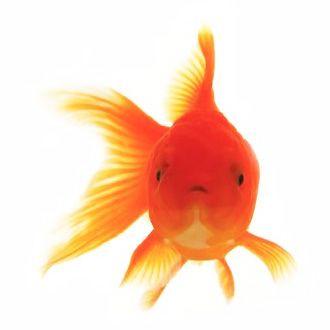
2. Goldfish have a three second memory


One of my all time favourite incorrect animal myths is the memory capacity of a Goldfish.


In actual fact, Goldfish have quite good memories – they’ve proved they can be taught how to navigate a maze.


Sadly, many still have to live in a fish bowl with a miniature castle.


I’m not sure whose idea it was to associate Goldfish with underwater replicas of English middle aged fortifications, but it definitely seems to have caught on...


Image: Rennett Stowe

3. Koalas are bears


Koalas are a type of marsupial, not a kind of bear.


They are furry like bears, but that’s where the similarities end. English settlers have been awarded the responsibility of awarding the koala bear its incorrect label.


But English settlers gave quite a few pretty peculiar names around this time so maybe it was a trend back then.

4. Worms will regenerate


This is the type of thing your primary school teacher tells you and you believe for life, and you’ll end up passing this (incorrect) vital information down to your children:


“If you cut a worm in half, then the two halves will regenerate and continue to live as two separate worms.”


This is just not true.


Earthworms are biologically complex like other species. They have all the internal body systems that make up most other living organisms i.e. brains, digestive systems....the lot.


You wouldn’t cut a dolphin in half to see if it survived, would you?


My suggestions is to use the appropriate pest control supplies UK instead of waging war on the garden critters by punishing them through death.


You might also be interested to learn that a mole survives on a diet of only earthworms, so you could already have some help there if moles are a garden feature of yours.


Unless it’s the pesky moles that are the problem, in which case you might want to save the worms and invest in some sonic mole repeller instead.


Image: Suwaif


5. Camels store water in their humps


Let’s get this straight - a camel is not a live, walking hip flask.


A camel’s hump contains fat reserves providing the animal with the same amount of energy as three weeks of food do, so they’re more like packet lunch boxes than water bottles.


For animals, desert survival is about the preservation of water and nutrients within their bodies rather than actual storage for when they get a bit bored.


So, there you have your 5 more animal myths blown out of the water.


Your task is now to find some more to add to my list...


Guest Post: Cat Care 101: Dogs Aren't the Only Pet in Need of Training

Liz Becker is a blogger, freelance writer and recent college graduate. She
currently performs market research for an online marketing firm when she
is
not contributing her own thoughts and observations to the online
community.


Cat Care 101: Dogs Aren't the Only Pet in Need of Training


When
most people think about pet training, they think about dogs. However,
the more you learn
about cat behavior
 and cat care, the more you will realize
that your cat or kitten needs to be trained as well! Cats have a
number of natural behaviors that can make them undesirable as
companion animals. If you want to know why you should train your cat,
check out the list of reasons below! 


Saving Your
Food and Your Paperwork 


Some cats love
jumping up on tables, and there are plenty of reasons for a cat to
wish to do so. They may be interested in what you are doing or they
might want to know what you are eating. When your cat jumps up on the
table, say “no” very sternly and remove it. If it persists, spray
it with water from a garden spray bottle. 


Never feed your cat from
the table, as this will only promote this undesirable behavior.
Reprimand your cat every time you see it on the table; otherwise it
will think that being on the table is allowed. 


Protecting Your
Furniture 


Scratching is a
natural behavior, but it can ruin your walls and your furniture. You
can mitigate the issue by keeping your cat’s claws clipped, but
this is only a short term solution. Give your cat a few different
options when it comes to scratching. Some cats prefer mats, while
others prefer posts. Place the mat or post in front of the location
that the cat typically scratches. Scold the cat when you see it
scratching on your furniture and praise it when you see it scratching
where it should. 


Preserve Peace
at Dinner 


Some cats haunt
the dinner table when you are trying to eat. If your cat picks up the
habit of begging, it can turn into quite a pest. Never feed your cat
from the table. If it lingers around the dinner table, ignore it. If
you want to give your cat something from your plate, something which
should be a rare occurrence, simply wait until after dinner and put
it in the cat’s bowl. 


If you are
invested in turning your cat into a well-behaved member of your
family, take the time to train it appropriately. While cats do not
need the same kind of training as dogs do, you’ll find that
training your cat can be rewarding and that it can even lead to a
tighter bond between the two of you.

Guest Post: Top 7 Tips for Traveling by Car with Your Cat

Kim Salerno is the President & Founder of TripsWithPets.com.
She founded the pet travel site in 2003 and is an expert in the field
of pet travel. Her popular web site features pet friendly hotels &
accommodations across the US and Canada, along with other helpful pet
travel resources. Her mission is to ensure that pets are welcome, happy,
and safe in their travels.


 Top 7 Tips for Traveling by Car with Your Cat


 Amongst pets, dogs are the most frequent travelers.  They account for
over 85% of pet travelers.  Trips to the beach,  family vacations, 
traveling to pet friendly accommodations...no
matter what the adventure, most dogs love car rides and can't wait to
hop in and hit the open road.  Cats on the other hand - not so much. 
Most cat's car travel takes place when they are going back and forth to
the vet (no wonder they don't like the car).  However, many cat parents
are faced with a big dilemma when they have to move - particularly if
the move is a long distance.  They are stressed at the thought of
putting terrified Fluffy in the car - traveling for hours on end.  In
addition, a growing number of cat parents would like to include their
cat in their daily travels.

We've come up with some tips to help make your cat's car travel experience a better one...for both of you! 

1.  Pet Carrier Training:  Always use a pet travel carrier
for your cat when traveling in a car.  The carrier should be large
enough for your cat to stand up, turn around, and lie down comfortably.
Be sure the carrier has proper ventilation.  Get him used to their
carrier in your house.  Place his bedding, some toys, or maybe some
catnip or kibble in the carrier and keep the carrier door open.  Let
your cat go in and out of the carrier at their leisure. Do this until
your cat feels comfortable.

2.  Familiarity is Comfort: 
Cats are highly sensitive to the environment and their territory so you
want to help to make the car part of their territory.  Place a towel or
blanket with your cat's scent on the car seat.  Put your cat in the car
with you and close the doors.  Let your cat explore your car, rub
around and spread their scent.   Do this a few times a day for a couple
minutes and gradually increase the time.

3.  Positive Reinforcement: 
Once your cat is calm in the car, start feeding him in the car for at
least a week. If play or catnip motivate him more than food, then let
your cat indulge in that while in the car.   Again, associating the car
with all things good will help make your cat a better traveler.

4.  Introduce Carrier in Car: 
Gradually your cat will begin to accept the car as his territory.  When
he's at this point, it's time to introduce the travel carrier into the
car (so be sure you are simultaneously crate training him).  Put your
cat in the carrier and place the carrier in the back seat or cargo area
of your vehicle.  Be sure the carrier is secure and away from airbags. 
Turn on the engine and that's it. Don't drive anywhere. Let your cat get
used to the noise of the engine and the vibration.  Do this at least 3
times a day until your cat gets used to it.  Reward your cat as soon as
he is let out of his carrier.

5.  Short Rides: 
Once your cat is used to the car and engine, it's time to move.  Back up
to the end of the driveway and drive up it again.  Do this a few times
then take your cat out of the car and into the house.  Reward him with
play time and treats once you let him out of his crate. When you feel
your cat is ready, extend your trip and drive around the block.  Slowly,
increase the length and duration of your car rides.  Again, the key is
to do this very gradually and reward your cat after each step.  Your cat
will let you know if he's not comfortable with the speed of his "car
training."

6.  Calm Energy:  Throughout the
entire process, it's important for you to be calm.  Pets sense your
energy.  So, when you're hyped up and stressed, they will be too.

7.  Potty Breaks: 
If you're traveling a long distance, you'll need to consider the issue
of potty breaks for your cat.  Some cat parents have harness trained
their cat.  This allows them to walk their cats at rest areas along the
way.  Otherwise, it is recommended that you keep your drive time down to
8 hours at most.  At that point allow your cat to have a potty break at
your night's destination.  You know your cat best, so this time could
vary.

Whether it's including your cat while running errands
around town or a move across country with your cat, making them happy in
the car is essential.  Helping your cat become more comfortable
traveling in a car definitely takes some time and a lot of patience. 
Stick with it and take your time...remember,  it's a gradual process
that should not be rushed.  Safe and happy travels with your cat!

For more information, visit www.tripswithpetscom.
TripsWithPets.com is the premier online guide for pet travel-offering
resources to ensure pets are welcome, happy and safe when traveling.
Visit www.tripswithpets.com to find a directory of pet friendly hotels
and accommodations across the U.S. and Canada, airline policies, pet
travel tips, pet travel supplies, along with other pet travel resources.
Related Posts Plugin for WordPress, Blogger...